Where Unbounce stops, the loop stays open.
Unbounce is a mature page builder with real testing — but the page is hosted on their infrastructure, and it never sees the ad. Which ad needs a page, what that page should say, and whether the pair is worth the traffic all stay your homework. AgentMark starts from the ad and publishes into your own site.
 AgentMarkThe whole route
- Reads the adYes
- Writes its pageYes
- Publishes in your storeYes
- Tests on that ad's trafficYes
 UnbounceBuilder and A/B platform
- Reads the adNo
- Writes its pageFrom a template
- Publishes in your storeTheir domain
- Tests on that ad's trafficYou point traffic
Side by side
AgentMark vs Unbounce.
When Unbounce is the right choice
You want a visual canvas for pages that have nothing to do with paid ads — a webinar signup, an event page, a campaign microsite — and you are happy for those pages to live on a separate stack. Unbounce is good at that and has been for years.
When AgentMark is
The pages exist because ads point at them. You want the ad that deserves a page picked for you, the page written from that ad's own copy, published to the store you already run, and split against the incumbent on traffic you are already paying for.
Why one page per ad
The click should land on the promise it was sold.
 TikTok ad
The ad promises
Still awake at 3am? It isn't stress.
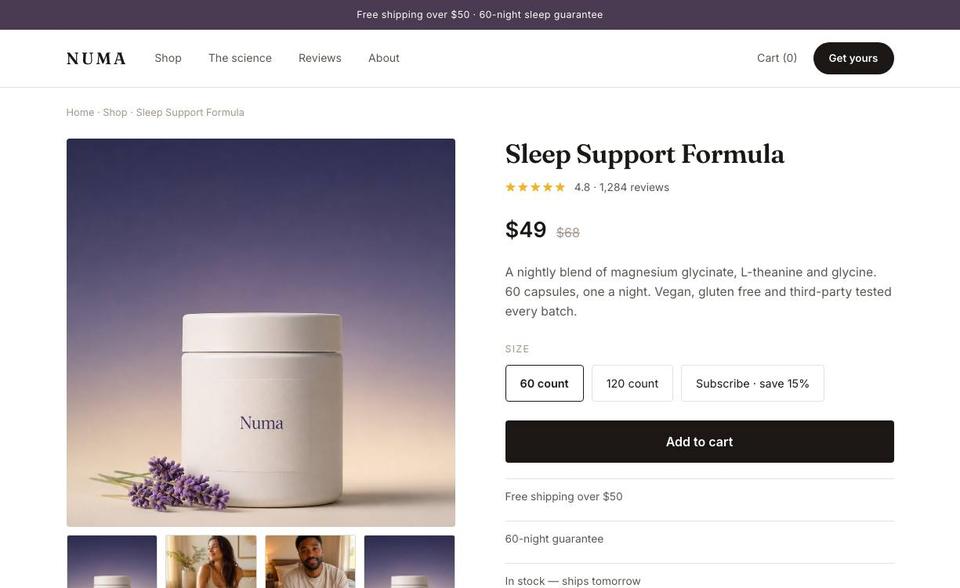 No sign of the promise
Today: the shared product pageThe visitor has to start over.
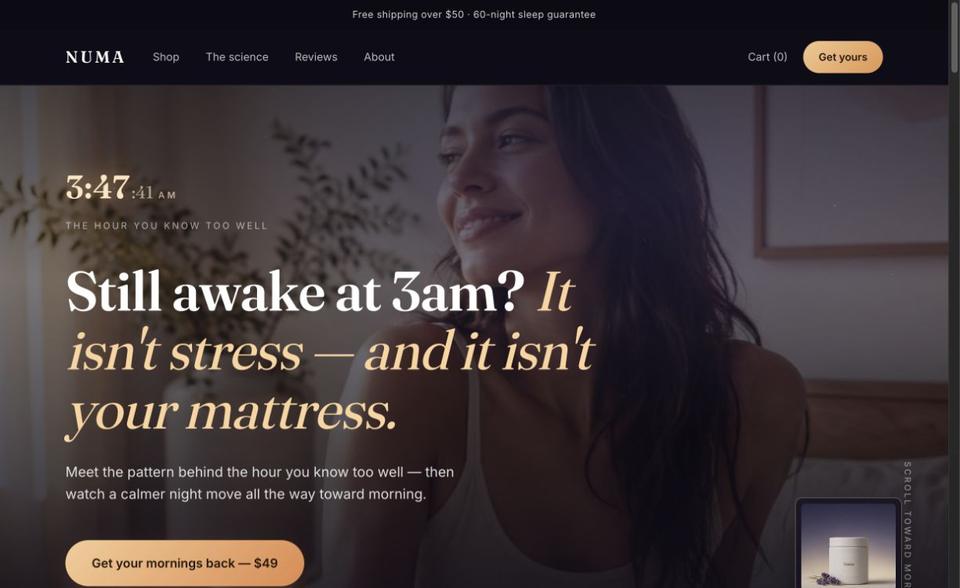 The ad's promise, as the headline
With AgentMark: its own pageThe promise continues, then it gets proved.
Customer results
Paid traffic that finally pays.
What changed for them with AgentMark, in their own words — and what they are testing next: one page for every ad.

With AgentMark
$1M+
lifetime sales, at a 3:1 ROAS
“We went from losing money on paid acquisition to more than $1M in lifetime sales and roughly $60K per month at a 3:1 ROAS. We’re now testing AgentMark’s 1:1 landing-page approach to see how much further we can improve the economics of the traffic we already buy.”
Kari Milinkovich · Embrace Your Style Nails

With AgentMark
$21 → $10
cost per purchase
“We previously cut cost per purchase from about $21 to $10 and saw Facebook purchases grow from 58 to 458 in a month. We’re now testing AgentMark to see whether matching every ad with a page built around its exact message can push conversion even further.”
Ali Kothari · Eat Your Coffee

With AgentMark
<1× → profit
ROAS, from below 1× to profitable
“We’ve experienced paid acquisition move from below 1x ROAS to profitability. We’re now testing whether AgentMark can improve the post-click side of that equation by giving each major creative angle a landing page built specifically around it.”
Justin Raghunandan · Moxie Scrubs
Also on AgentMark
Read every result










Common questions.
Can I keep Unbounce and use AgentMark?
Yes. Point a test at any challenger URL, including one you built in Unbounce, and use AgentMark's split and measurement on their own.
Why does it matter whose domain the page is on?
Your cart, your theme, your pixel and your trust signals live on your domain. A separate page host means a second stack to maintain and, for commerce, a checkout hand-off you did not have before. AgentMark publishes into the site you already run.
Is AgentMark's testing as mature?
Different shape. AgentMark is opinionated about one thing — a landing-page split under one ad — and enforces preflight validation, sample-ratio checks, a call policy you own, and a human verdict. It deliberately does not show a confidence figure without a stated method behind it.